Soundproofing a home office without renovation is possible only if you define the goal correctly. You can reduce echo, make calls clearer, soften household noise and lower the amount of sound leaking through obvious gaps. You cannot turn a rented bedroom into a recording studio with thin foam squares.
I have worked from flats with thin walls, old windows and neighbours who seemed to move furniture exactly when meetings started. The biggest lesson: the useful work is not glamorous. Door seals, rugs, curtains and desk placement usually matter more than the acoustic panels people buy first.
This guide gives you the practical order: measure, distinguish blocking from absorption, fix no-cost layout issues, seal gaps, add soft surfaces, then use panels or better audio equipment only when the basics are done.
Absorbing sound is not the same as blocking sound
This is the confusion that wastes the most money.
Blocking sound means stopping noise from entering or leaving the room. It needs mass, airtightness and barriers. Think dense doors, sealed gaps, double glazing, heavy walls, bookshelves and construction materials.
Absorbing sound means reducing reflections inside the room. It makes your voice sound less echoey and makes calls clearer. It needs soft or porous materials: rugs, curtains, acoustic panels, fabric furniture, books and textured surfaces.
If you hear traffic or neighbours through the wall, foam panels will not solve it. If your own voice sounds harsh and echoey on calls, panels, rugs and curtains may help a lot.
Most home offices need both, but in the right order.
Start by measuring
Before buying anything, measure the room with a basic sound meter app. A phone is not a professional meter, but it is useful for comparing before and after.
Measure three situations:
- Quiet baseline: everything off, door closed.
- Normal work period: usual street, neighbours, appliances and home noise.
- Worst period: the time of day when noise usually becomes a problem.
Write down the numbers and the source of noise. Is it traffic, footsteps, voices, washing machine, a child in the next room, keyboard echo, or your own voice bouncing around the room?
Do not chase perfect numbers. What matters is whether a change reduces the specific noise that interrupts work. A 5 to 10 dB improvement can feel meaningful. A 15 to 20 dB improvement is dramatic in a normal home.
Level 0: free changes first
Start with layout. These changes cost nothing and can save you from buying the wrong product.
Move the desk away from the noisy wall. If the neighbour noise comes through one shared wall, do not place your microphone, head and chair directly against it if another layout is possible.
Use furniture as mass. A full bookshelf against a shared wall works better than people expect. Books add mass and irregular surfaces. It will not replace construction, but it can soften voices and reduce reflections.
Close doors and windows during calls. Obvious, but easy to ignore. A half-open door can undo every acoustic panel in the room.
Move the microphone closer. If the microphone is far away, it captures more room sound. A closer mic with lower gain often improves call quality more than adding panels.
Avoid corners. Corners exaggerate reflections. If calls sound boomy, move the desk or mic position before buying anything.
If these changes solve the call problem, stop there. You do not need a studio. You need a room that lets you work.
Level 1: the best upgrades under a small budget
The first paid layer should seal gaps and add soft surfaces.
Door seals and sweep
Door gaps leak sound. Add adhesive seals around the sides and top of the door, then use a door sweep or draft stopper at the bottom. The bottom gap is often the biggest leak.
Simple test: close the door and look for light. If light passes, sound passes. Seal that before buying panels.
Rug on hard floors
Tile, laminate and hardwood floors reflect sound. A rug does not block neighbour noise through walls, but it reduces room echo and makes your voice sound less harsh. It also reduces impact noise if your chair moves on a hard floor.
Choose a rug large enough to matter. A tiny decorative rug under the chair is less useful than one covering a meaningful part of the floor.
Heavy curtains
Heavy curtains help with echo and can slightly reduce window noise, especially when they cover beyond the window frame and reach close to the floor. They are not magic, but they are useful because windows are weak acoustic points.
Blackout or thermal curtains often help more than thin decorative fabric because they add more material.
Level 2: panels and heavier treatment
Once gaps and soft surfaces are handled, panels make more sense.
Acoustic panels
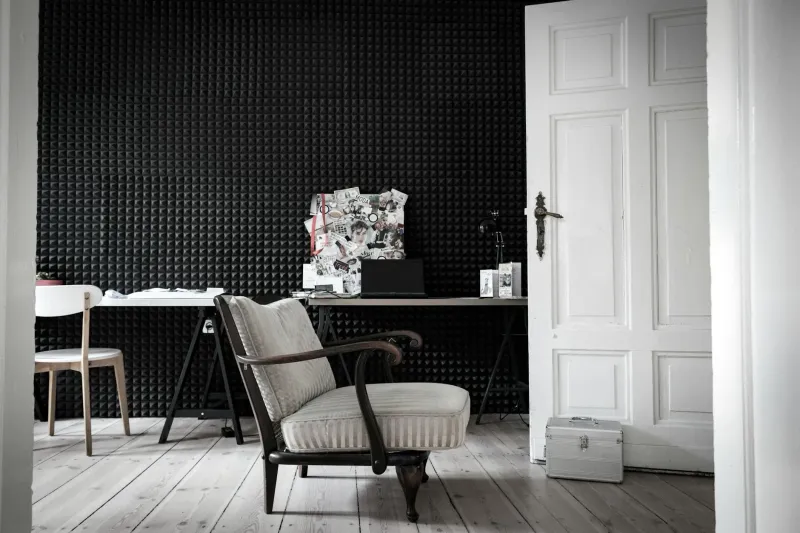
Use acoustic panels to reduce echo, not to block traffic or neighbours. Felt panels, fabric-wrapped mineral wool panels and thicker PET panels are usually more useful than thin foam.
You do not need to cover every wall. Treat the most reflective surfaces first:
- Wall behind or beside the desk.
- Wall opposite a hard surface.
- Area near the microphone.
- Bare wall that creates flutter echo.
If you clap and hear a sharp ringing or slapback, absorption can help. If you hear the neighbour’s television through the wall, absorption alone will disappoint you.
Bookshelves and storage
A packed bookshelf is an underrated acoustic tool. It adds mass, breaks up reflections and doubles as storage. If you already need storage, this is more useful than decorative foam.
Window sealing
Old windows often leak air and sound. Removable sealing strips can help. If the window is very poor, heavy curtains may help with comfort but true isolation needs better glazing or construction. In rentals, accept the limit and combine sealing with headphones or call scheduling.
What does not work
Avoid these common traps:
- Thin foam squares sold as soundproofing: they absorb a little high-frequency echo but do not block noise.
- Egg cartons: an internet myth, not a serious acoustic treatment.
- “Soundproof paint”: it will not solve home office noise.
- Random panels before sealing gaps: the door and window leaks remain.
- Music to cover noise: it may mask interruptions, but it also adds fatigue if you need sustained attention.
The worst purchase is the one that solves a different problem from the one you have.
How to improve calls without fully soundproofing
Many people do not need a quieter room. They need better call audio.
Use this order:
- Close doors and windows.
- Move the microphone closer to your mouth.
- Lower input gain if possible.
- Turn on noise suppression in your call software.
- Add a rug or curtains if the room sounds echoey.
- Avoid placing the microphone in a corner.
- Use headphones to prevent speaker sound feeding back into the mic.
If you work in a noisy home, good headphones can protect focus. They do not soundproof the room, but they help you control what reaches your ears. For room-level noise, read this guide first; for heat and open windows, pair it with working from home in hot weather.
A realistic room plan
If I had to treat a small home office without construction, I would do it like this:
- Measure current noise and identify sources.
- Move the desk away from the worst wall or corner.
- Seal door gaps and bottom gap.
- Add a rug if the floor is hard.
- Add heavier curtains if the window is a weak point.
- Put storage or a bookshelf against the problem wall.
- Add acoustic panels only for echo or call quality.
- Improve microphone placement and headphones.
That order prevents wasted money. If the door leak is the main issue, panels will not help. If echo is the main issue, door seals alone will not make your voice sound warm.
Noise source by source
Different noise sources need different fixes.
Voices through the wall
Voices through a shared wall need mass more than foam. A full bookshelf, storage unit or dense furniture against that wall can help a little. Acoustic panels will make your room less echoey, but they will not stop the neighbour’s voice if the wall is light.
Street noise through a window
Start with the window. Close gaps, use heavier curtains and avoid working with the window open during deep work. If you need airflow in summer, this becomes a trade-off between heat and noise. Pair this with working from home in hot weather because open windows are often the noise leak.
Footsteps from above
Footstep impact noise is hard to solve from below without construction. Rugs help if you are the person creating impact noise for someone below, but they do little against someone above you. Use headphones, schedule deep work away from the worst hours and accept the structural limit.
Echo in calls
Echo is the easiest problem to improve without renovation. Add a rug, curtains, soft chair, bookshelves or panels near reflection points. Move the microphone closer and lower gain. Your call audio can improve even if the room is not quieter.
Household noise
Household noise is partly acoustic and partly procedural. A closed door, call schedule, headphones and a visible “on a call” signal may work better than another panel. In a family home, habits matter as much as materials.
Microphone placement matters
A common mistake is treating room acoustics and microphone quality as separate. They are linked.
If the microphone is far away, it captures more room. If it is close, it captures more voice and less echo. That means a modest microphone placed well can beat a better microphone placed badly.
Call setup checklist:
- Microphone 10 to 20 cm from the mouth if possible.
- Input gain low enough that it does not boost room noise.
- Headphones instead of speakers.
- Noise suppression enabled for casual calls.
- Desk away from bare corners.
- Soft material somewhere in front of or beside the voice path.
Do a test recording. It is faster than guessing. Record 20 seconds before and after each change and listen with headphones.
What success should sound like
Success is not silence. A good home office acoustic result sounds like:
- Your voice is clear on calls.
- You do not hear every minor household sound.
- Echo is reduced enough that calls are not tiring.
- You can do focused work without constant interruption.
- Other people in the home hear less of your calls.
This is an important mindset shift. If you expect studio isolation, every low-cost change will disappoint you. If you expect meaningful reduction in fatigue and interruptions, the same changes can be a clear win.
Quick buying order
If you want the shortest version, buy or change things in this order:
- Door seals and bottom sweep.
- Rug if the floor is hard.
- Heavier curtains if the window is a weak point.
- Bookshelf or storage against the noisy wall.
- Better microphone position or headset.
- Acoustic panels for echo.
- Headphones for focus.
Do not reverse this order unless you know your specific problem. Panels before seals are the classic mistake. A better microphone before moving the microphone closer is another. The cheap physical gaps usually deserve attention first.
Rental-friendly rules
For rented homes, keep treatments removable:
- Use adhesive seals that can be removed.
- Choose freestanding shelves before wall-mounted construction.
- Use rugs and curtains instead of floor or window renovation.
- Use clamp or freestanding panels if you cannot drill.
- Keep receipts and avoid permanent glue on visible surfaces.
The goal is a room you can work in now without creating a repair problem when you leave.
If calls are the only problem
If your only issue is how you sound on calls, do not start with “soundproofing”. Start with call audio:
- Move the mic closer.
- Lower input gain.
- Use headphones.
- Add one rug or curtain if the room is bare.
- Keep the desk away from the corner.
This narrower path is cheaper and faster. True sound isolation matters when noise interrupts your work or leaks to others. Echo on calls is often a microphone and reflection problem.
Mistakes I would avoid
Buying foam first. Foam looks like “acoustics”, so people start there. It is usually the wrong first purchase for home offices.
Ignoring the door. Doors are weak points. The bottom gap is often bigger acoustically than people realise.
Forgetting the floor. A hard floor turns voices and keyboard noise into reflections. A rug can change the feel of a room quickly.
Not measuring before and after. If you do not measure, you do not know which change worked. Even a phone app is enough for comparison.
Expecting silence. In a normal flat, the goal is lower noise and less fatigue, not perfect isolation.
When renovation is the only real answer
No-renovation fixes have limits. If you need to block loud traffic, impact noise from above, heavy music through a party wall or constant construction noise, you may need structural work:
- Secondary glazing.
- Heavier door.
- Decoupled wall lining.
- Mineral wool and plasterboard.
- Floor underlay or ceiling treatment for impact noise.
Those are different projects, with different budgets. For a rented home office, it is usually better to improve the controllable 60% and use headphones or schedule changes for the rest.
Summary
To soundproof a home office without renovation, work in layers:
- Identify the noise.
- Fix layout and microphone position.
- Seal door and window gaps.
- Add rugs, curtains and furniture.
- Use panels for echo, not neighbour noise.
- Improve headphones and call software.
If your room is also small, read small apartment home office ideas. If fatigue is the wider issue, how your home office environment affects productivity connects noise with light, heat and layout.