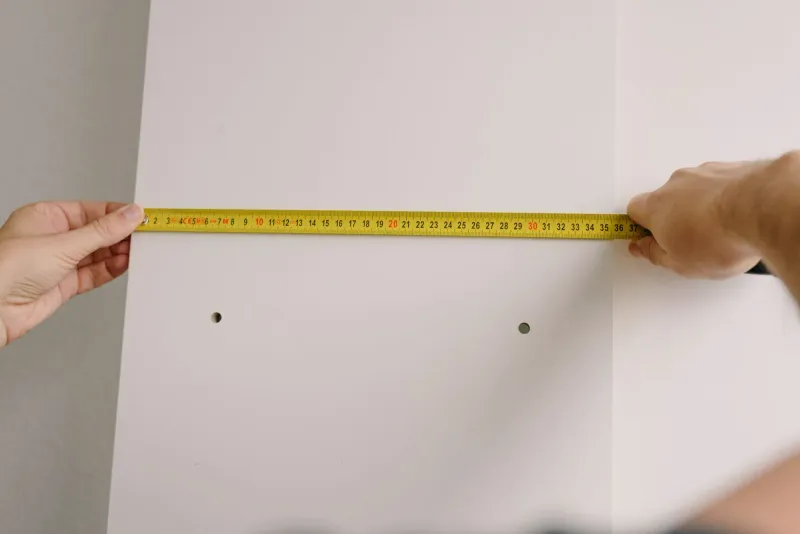
Choose a standing desk frame if you already own a compatible tabletop or need a specific size, material or shape. Choose a complete standing desk if you value simpler assembly, a single warranty and a predictable total cost. Buying a frame is not automatically cheaper: it depends on everything else you need to add.
| Situation | Choice | Reason |
|---|---|---|
| You already have a compatible tabletop | Frame | You avoid paying twice for the surface |
| You want solid wood or an unusual size | Frame | You control material and dimensions |
| It is your first standing desk and standard sizes fit | Complete | Fewer decisions and resolved compatibility |
| You lack tools or do not want to drill | Complete | More guided assembly |
| The frame plus a tabletop costs more than the set | Complete | Lower total spend |
David has worked from home since 2019 and his current desk is fixed: a solid-wood tabletop mounted on IKEA legs. That experience is useful for discussing measuring, marking, choosing screws, clearing space under the top and handling a DIY assembly. He has not used a standing-desk frame and has not tested the four products cited. The analysis is based on official pages, catalogue data and recurring points in verified reviews; it does not turn that research into a personal test.
If you are still deciding on height, motor and controls, read the guide to choosing a standing desk. This article tackles the step before that: frame plus tabletop or a complete set.
Standing desk frame or complete: the useful decision
A frame gives freedom and also shifts work to the buyer. You can reuse a surface, order solid wood or build an unusual size. In return, you are responsible for making the frame, tabletop, screws and accessories work together.
A complete desk reduces variables because the manufacturer has already set dimensions and fixing points. It may not arrive assembled or offer a premium tabletop, but it avoids designing the join between separate parts.
Do not decide on looks alone. First measure the actual space, including skirting boards, doors and clearance behind. Then work out your seated and standing heights with the correct desk and chair height guide. If neither format covers those numbers, the other advantages stop mattering.
The total cost, not the box price
A frame sold without a tabletop can seem the cheaper option because the first number excludes the surface. The real comparison is this:
True cost = frame + tabletop + fixings + tools + cable management + assembly time + return or warranty risk.
If you already own tools, the right screws and a compatible tabletop, several items drop near zero. Reusing the surface can make financial sense and keeps a top that already fits the room.
The calculation changes when you start from nothing. A custom tabletop may need edge finishing, treatment, delivery, or machining. Add inserts, washers, a cable tray and help to turn the assembly over. Measuring and assembly time is part of the cost even if you do not put a price tag on it.
Getting it wrong also costs. If the stiffeners clash with the crossbar or the frame does not open wide enough, returning a large part is awkward. With a complete set, an incompatibility between frame and top affects a single product. With separate parts, each seller may only cover the piece they supplied.
That is why I do not publish current prices. They change, and a single figure does not answer the question. Compare the ready-to-use total with the accessories you actually need.
The tabletop calls more shots than it looks
Before buying standing desk legs, cross-check the frame manual against the exact tabletop. Outside dimensions alone are not enough. The frame manufacturer sets the limits, and those override any generic online rule.
Check these points in order:
- Adjustable frame width. The columns and crossbar must fit within the tabletop without stretching the adjustment to an improvised limit.
- Outside width and depth of the tabletop. The surface needs to cover the frame, keep a comfortable front overhang and avoid a side overhang that encourages flexing.
- Thickness, weight and material. There is no universal thickness. What governs is the manufacturer’s stated minimum, how well the material holds screws and the actual screw length. Chipboard, plywood and solid wood do not behave the same when drilled.
- Screw points and screw length. Mark each hole before drilling. The screw must hold with enough body without breaking through the top face. Reusing damaged holes or drilling near an edge reduces the safety margin.
- Total moving load. Add the tabletop’s own weight, monitors, arms, computer, speakers and accessories. The advertised frame capacity is not the payload left for equipment alone.
Look at the underside too. The control box, crossbar and cable tray need free zones. A drawer unit, a modesty panel or a stiffener can occupy the frame’s place. Leave front overhang to sit comfortably, and check the side clearance before fitting a clamp monitor arm.
A sketch from below reveals clashes that a list of measurements can hide. It is especially useful with reused tabletops, whose holes and reinforcements were not designed for that frame.
Stability: motor count does not decide on its own
Two motors do not automatically guarantee a stable desk, just as a single motor does not make one unstable. The motor determines how the load lifts; firmness depends on the whole system.
Column stages and their play matter when the desk is high. The feet, the crossbeam, the join and the tabletop’s own rigidity also contribute. A long, flexible surface can amplify vibration.
Load distribution counts. A monitor at one end, a long arm or a side tower creates leverage. The frame behaves better with weight centred than pushed back. The higher you work, the easier it is to notice motion when typing.
Judge motor, capacity and stability separately. If you work tall, use two monitor arms or choose a large tabletop, leave load margin and check columns, feet and crossbeam. Do not buy a dual motor assuming that label sorts out the rest of the geometry.
Assembly and warranty: who answers for each join
Assembling a frame means centring it, checking squareness, marking, drilling pilot holes when needed and choosing compatible screws. Then you attach the controller and control box without invading legroom or the cable tray.
My fixed solid-wood desk taught me a simple limitation: the underside fills up fast. Between legs, reinforcements and cabling, a few millimetres miscalculated can leave an accessory stranded. That experience does not let me judge lifting motors, but it does let me argue for measuring the underside before drilling.
With a complete desk, fixing points usually come defined and the manual guides a single product. There is still weight, screws and wiring, but you choose fewer parts. It fits if you lack tools, do not want to drill or need the workspace ready without designing it.
Read the warranty with one specific question: who answers if the join fails? With a complete set, frame and tabletop usually belong to the same reference. With a frame and a tabletop from different sources, the warranty splits. A manufacturer may cover the motor, but not a top cracked by unsuitable screws; the tabletop seller is not obliged to cover a separate installation, either.
Six cases where the answer changes
These scenarios start from what you already have and what you want to build.
Three cases for buying only the frame
-
You already have a compatible surface in good condition. You have checked adjustable width, depth, thickness, material, weight and fixing zones. Reusing it avoids paying for the tabletop twice and keeps a size that already works in the room.
-
You need an unusual size. It might be a narrow top for a gap between walls, a deeper one for drawing, or a long surface to separate two work zones. Here the frame offers freedom that the complete-desk catalogue does not always provide. The condition is staying within the manufacturer’s published tabletop range, not forcing the frame to adapt.
-
You want solid wood for finish or repairability. A separate frame lets you choose species, grain, edges and treatment. It is a material decision, not a shortcut to spend less. The tabletop’s weight must fit within the total load, and its natural movement requires proper fixing.
Three cases for choosing the complete desk
-
It is your first standing desk and a standard size works. You would rather focus on height range and placing your equipment well. The set removes the cross-check between two specification sheets.
-
You rent or expect to move. You do not want to alter a tabletop that already belongs to another desk, or to order a surface that is hard to transport. A compact, documented set can simplify disassembly, parts inventory and any claim later.
-
The workspace must be operational with little preparation. You lack a drill, the room to work with the top face down, or the willingness to hunt for compatible screws and trays. In that case, paying for resolved compatibility can be more sensible than turning a furniture purchase into a small carpentry project.
Four products that clarify the format difference
These models are catalogue examples, not a ranking or a direct buying recommendation. They show how range, load and included parts vary. Availability and versions can change.
The Duronic TM61 is a frame without a tabletop, dual motor, with a published range of 72 to 120 cm and a maximum load of 80 kg. The catalogue reference was listed as available on 1 August 2026. A discrepancy exists between the commercial source URL and the validated ASIN, so I do not use that URL as exact corroboration for the model.
The AIMEZO dual motor is also sold without a tabletop. Its registered data shows 69 to 115 cm and 120 kg. It illustrates a frame with a higher published load and a shorter travel, but it was unavailable on 1 August 2026. It is included as a technical comparison, not as a current purchase option.
The Maidesite T1 Pro uses a single motor, lists 72 to 120 cm, 100 kg and wide tabletop-size compatibility. Maidesite product pages and versions can differ, so check the current model name and specifications before buying. The listing that appears on Amazon today should not be assumed identical to the registered T1 Pro. I omit speed because it adds nothing to this decision and is sensitive to those version differences.
The Duronic CD120 shows the opposite format: a set with a 120 x 60 cm tabletop, 72 to 118 cm range and 70 kg load. It was unavailable on 1 August 2026, so here it only helps compare what a complete desk resolves versus a frame from the same brand: surface, dimensions and fixings already defined.
To explore other sizes and filter by your needs, use the desk and chair selector. Then check the current product page of the model you pick; the selector narrows options, it does not replace the manual or your room measurements.
Checklist before you decide
Do not buy until you can fill this list with real numbers and answers:
- I have measured the available width and depth, including skirting, cable routing and space to move.
- I know the dimensions, thickness, material and weight of the tabletop I will use or buy.
- The frame manual accepts that tabletop and specifies safe fixing points and screws.
- The height range covers my seated and standing posture, not just a rough average.
- I have added the weight of the tabletop, monitors, arms, computer and other accessories.
- I have the tools I need and a safe place to assemble and turn the unit over.
- I have compared the total budget, including fixings, cable management, delivery and time.
- I understand whether the warranty covers the whole desk or is split between frame and tabletop.
If every answer favours reuse or a special surface, buy the frame with the measurements already resolved. If doubts appear around compatibility, tools, final cost or warranty responsibility, the complete standing desk is usually the cleaner call.